















































































Running a restoration business is unlike running most other service companies. Your customers usually do not plan to contact you. They reach out during stressful and urgent situations such as flooding, fire damage, mould outbreaks, or storm related destruction. In these moments, speed, visibility, and trust matter more than anything else.
Because of this urgency, marketing for home repair services like restoration businesses needs to work differently. It must ensure that your company appears at the right time, in the right place, and with the right message. A slow or poorly structured marketing approach can mean missed calls, lost jobs, and reduced growth.
Many restoration businesses still rely heavily on referrals or insurance driven work alone. While these channels are valuable, they are often unpredictable. Sustainable growth requires a well planned marketing strategy that consistently brings in enquiries and builds brand trust over time.
In this guide, we will walk through seven essential marketing strategies that can help restoration businesses attract more leads, convert more enquiries, and build long term stability. Each strategy focuses on practical steps that can be applied gradually without overwhelming your operations.
Understanding the Restoration Customer Mindset
Before exploring specific strategies, it is important to understand how restoration customers behave.
Most restoration customers:
- Search online during an emergency
- Want immediate reassurance and clarity
- Prefer businesses that appear local and established
- Choose companies that communicate clearly and professionally
This means your marketing must prioritise visibility, credibility, and ease of contact. Complex messaging or slow response times can quickly push potential customers towards competitors.
Effective marketing starts by aligning your online presence with how real customers think and act under pressure.
1. Strengthen Your Local Search Presence
Local visibility is the foundation of restoration marketing. When people search for emergency services, they almost always include location based intent, even if they do not type a city name explicitly.
If your business does not appear prominently in local search results, you risk losing leads to competitors who do.
Optimizing your Google Business Profile
Your Google Business Profile plays a critical role in local visibility. It often appears before websites in search results and directly influences customer trust.
Important optimisation steps include:
- Ensuring your business name, address, and phone number are accurate
- Selecting the correct primary and secondary categories
- Adding service areas clearly
- Uploading real photos of your team and completed work
- Keeping opening hours updated
- Responding to customer reviews
A well maintained profile increases your chances of appearing in map based searches. For Google Business Profile optimisation for multi location businesses following a structured optimisation approach is essential.
Consistency across online listings
Local search performance also depends on consistent business information across directories and citations. Inconsistent details can confuse search engines and reduce trust.
This is where local SEO services play a vital role in ensuring your business information remains accurate and aligned across platforms.
2. Invest in Search Engine Optimisation for Restoration Services
Search engine optimisation helps your website appear organically when customers search for restoration related services. Unlike paid advertising, SEO continues to deliver traffic even when you are not actively spending money.
For restoration businesses, SEO should focus on service specific and emergency intent keywords.
Creating service focused pages
Each major service should have its own dedicated page. This helps search engines understand what you offer and improves relevance for specific searches.
Examples include:
- Water damage restoration
- Fire damage cleanup
- Flood restoration
- Mould removal
Each page should clearly explain:
- The problem customers face
- How your service helps
- What makes your business reliable
- How to contact you quickly
SEO also benefits from strong internal structure. It is critical to optimise website content for SEO as it improves crawlability and user experience.
Building long term organic authority
SEO is not a quick fix. Results take time, but they are often more sustainable than paid campaigns. Businesses that invest consistently in SEO tend to experience lower cost per lead over time.
3. Use Paid Advertising to Capture Emergency Demand
While SEO builds long term visibility, paid advertising helps restoration businesses capture immediate demand. During emergencies, customers rarely scroll far or compare many options. Appearing at the top of search results can make a significant difference.
Search advertising for restoration businesses
Search ads allow you to target high intent keywords and appear instantly for relevant searches.
Effective campaigns focus on:
- Emergency related keywords
- Location specific targeting
- Call focused ad formats
- Clear messaging around response times
For restoration services, call based campaigns often outperform form based campaigns. Customers prefer speaking to someone immediately rather than filling out long forms.
The 1Solutions guide on how Google Ads can support SEO and lead generation explains how paid and organic strategies work together.
Avoiding common paid advertising mistakes
Poor campaign structure, lack of tracking, or aggressive bidding can quickly waste budget. Regular monitoring and optimisation are essential.
This is where professional paid advertising management services can help businesses avoid costly errors while improving return on investment.
4. Build Trust Through Reviews and Social Proof
Trust is one of the most important factors in restoration marketing. Customers are often allowing your team into their homes or commercial properties during vulnerable moments.
Online reviews play a major role in shaping perception.
Encouraging genuine customer reviews
Satisfied customers are often willing to leave reviews if asked politely.
Best practices include:
- Requesting reviews after job completion
- Making the process simple
- Responding professionally to all feedback
Positive reviews improve conversion rates and local search visibility. Even neutral or negative reviews, when handled well, demonstrate transparency and professionalism.
Using visual proof to support trust
Photos and case studies help potential customers feel confident in your work. Before and after images, project summaries, and team photos humanise your brand.
Trust building also extends to your website content. Displaying certifications, insurance details, and clear contact information reduces hesitation.
5. Optimise Your Website for Conversions
Generating traffic is only valuable if visitors convert into enquiries. A restoration website must be designed with urgency and clarity in mind.
Key elements of a high converting restoration website
Your website should:
- Load quickly on mobile devices
- Display phone numbers prominently
- Offer click to call functionality
- Clearly state service availability
- Use simple enquiry forms
Many potential customers will access your site from mobile devices while dealing with an emergency. Poor mobile experience can result in lost leads. A great UI/UX can improve website user experience for higher conversions and help you convert more customers online.
Reducing friction for users
Avoid unnecessary distractions such as excessive animations or unrelated content. Visitors should immediately understand what you offer and how to contact you.
Clear calls to action guide users towards the next step without confusion.
6. Use Content Marketing to Educate and Build Authority
Content marketing helps restoration businesses build authority and trust before emergencies occur. Educational content positions your business as a helpful resource rather than just a service provider.
Useful content ideas for restoration businesses
Effective content topics include:
- What to do immediately after water damage
- How fire damage restoration works
- Insurance claim guidance
- Preventing mould growth
These articles help answer common questions and reduce uncertainty for potential customers. Over time, content marketing also supports SEO by increasing topical relevance.
Building familiarity before emergencies
Customers who have seen your brand before are more likely to contact you during emergencies. Content marketing helps establish that familiarity gradually.
7. Track Performance and Refine Your Marketing Strategy
Marketing without tracking is based on guesswork. Restoration businesses benefit greatly from understanding which channels generate real enquiries and jobs. Perform a compete website SEO audit to identify the issues hampering your website performance in the search results.
Key metrics to monitor
Important metrics include:
- Call volume
- Form submissions
- Conversion rates
- Cost per lead
- Response time
Call tracking tools help identify which campaigns generate phone enquiries. Website analytics provide insight into user behaviour and drop off points.
Using data to improve results
Tracking allows you to:
- Allocate budget more effectively
- Improve underperforming campaigns
- Scale successful strategies
Data driven decisions reduce waste and improve consistency.
Common Marketing Challenges in the Restoration Industry
Even experienced businesses face challenges when marketing restoration services.
Common issues include:
- Over reliance on referrals
- Inconsistent online presence
- Delayed follow ups
- Poor tracking systems
Addressing these challenges requires structure, not complexity. Small improvements often lead to significant gains.
How These Strategies Work Together
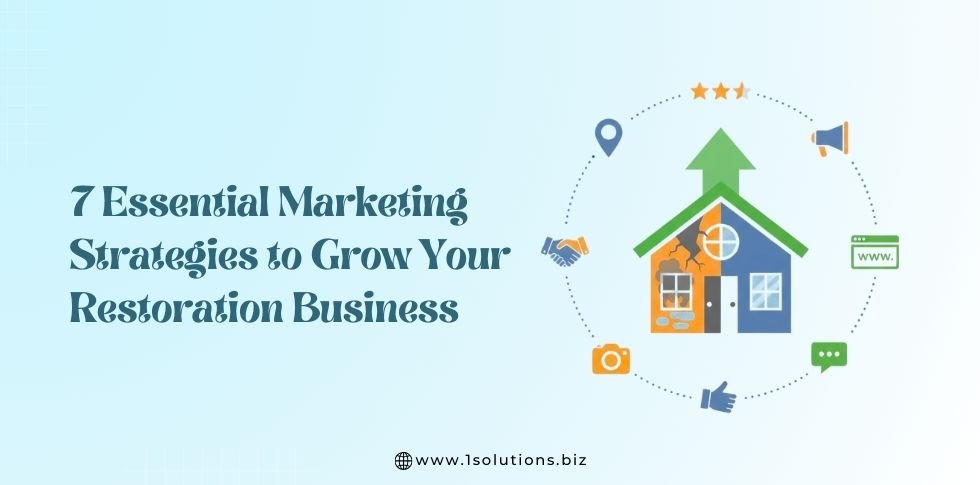
Each strategy supports the others. Local SEO improves visibility. Paid advertising captures immediate demand. Reviews build trust. Website optimisation improves conversions. Content marketing builds authority. Tracking ensures efficiency.
When aligned, these strategies create a reliable marketing system rather than isolated tactics.
A Long Term Growth Mindset for Restoration Businesses
Sustainable growth requires consistency and patience. Marketing should support operations, not overwhelm them.
Businesses that invest in structured digital marketing strategies often experience:
- More predictable lead flow
- Improved brand recognition
- Stronger customer trust
- Reduced dependency on single channels
Long term success comes from treating marketing as an ongoing investment rather than a one time effort.
Final Thoughts
The restoration industry is competitive, but businesses that adopt strategic marketing approaches can stand out effectively.
By focusing on local visibility, search optimisation, paid advertising, trust building, conversion optimisation, content creation, and performance tracking, restoration businesses can build a strong and sustainable growth engine.
At 1Solutions, we believe marketing should feel supportive and practical, not complicated or overwhelming.
With the right strategies in place, restoration businesses can focus on delivering excellent service while their marketing systems work consistently in the background.










 in India