














































































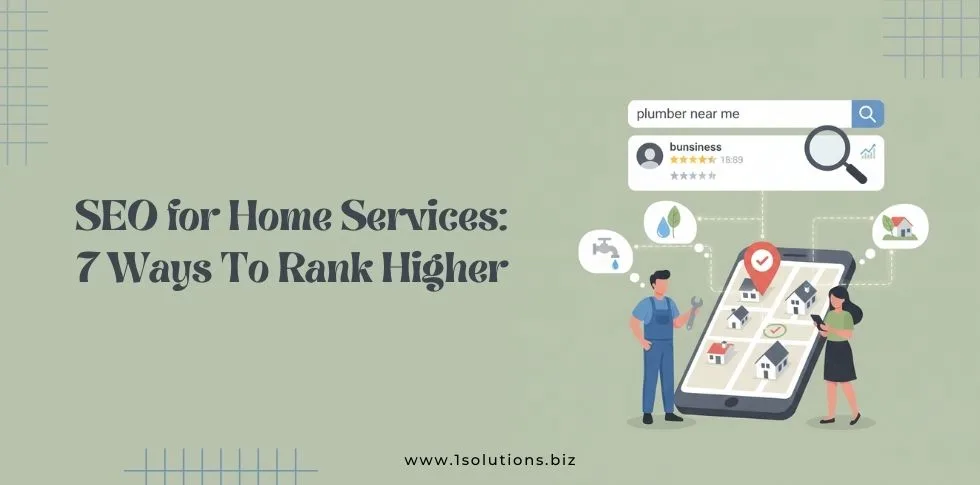
Home service businesses face unique challenges when competing online. Your customers need immediate help with plumbing emergencies, HVAC repairs, or electrical issues. They search for local solutions and expect to find you quickly. Strong SEO helps you appear when potential customers need your services most.
The home services industry operates differently from other sectors. Your customers typically search for solutions during stressful situations. They want fast results and local providers they can trust. This creates specific SEO opportunities that generic marketing advice often misses.
This guide covers seven proven strategies to boost your home services website rankings. These methods focus on local search dominance, technical optimization, and content that converts visitors into customers. Each strategy includes actionable steps you can implement immediately.
1. Master Local SEO Fundamentals
Local SEO drives the majority of home service leads. When someone searches for “emergency plumber near me” or “HVAC repair in Denver,” Google prioritizes businesses with strong local signals. Your local SEO foundation determines whether you appear in these crucial searches.
Optimize Your Google Business Profile
Your Google Business Profile serves as your digital storefront. Complete every section with accurate information. Add your business hours, phone number, address, and service areas. Upload high quality photos of your team, vehicles, and completed work.
Post regular updates about your services, seasonal offers, and helpful tips. Optimizing Google Business Posts for local engagement can significantly improve your visibility in local search results.
Encourage satisfied customers to leave reviews. Respond to all reviews professionally, including negative ones. Google uses review signals to determine local ranking positions. Businesses with more positive reviews typically rank higher than competitors.
Build Local Citations
Citations are online mentions of your business name, address, and phone number. Search engines use citations to verify your business legitimacy and local relevance. Focus on industry specific directories like Angie’s List, HomeAdvisor, and Yelp.
Maintain consistent information across all platforms. Different phone numbers or addresses confuse search engines and hurt your rankings. Audit your existing citations regularly to fix inconsistencies.
Target Location Specific Keywords
Include your city, neighborhood, and service area in your keyword strategy. Create pages for each service area you cover. For example, if you provide plumbing services in multiple cities, create dedicated pages for “plumbing services in Austin” and “plumbing services in Round Rock.”
Use location modifiers naturally throughout your content. Avoid keyword stuffing, but include geographic terms in your titles, headers, and body content where they make sense.
2. Create Service Specific Landing Pages
Generic service pages fail to capture specific search intent. Customers search for exact solutions like “water heater repair,” “drain cleaning,” or “electrical outlet installation.” Create dedicated pages for each service you offer.
Structure Your Service Pages
Each service page should follow a consistent structure. Start with a clear headline that includes your primary keyword. Describe the service, explain your process, and highlight your qualifications.
Include service specific information like typical completion times, equipment used, and pricing ranges when appropriate. Add before and after photos, customer testimonials, and case studies related to that specific service.
Address Customer Pain Points
Home service customers often search during stressful situations. Address their concerns directly. Explain what to expect, how long repairs take, and what preparation is needed.
Create content that builds trust and reduces anxiety. Include information about your licensing, insurance, and guarantees. Explain your safety protocols and cleanup procedures.
Optimize for Voice Search
Many home service searches happen through voice assistants. People ask questions like “Who can fix my garbage disposal?” or “What plumber is open on Sunday?” Structure your content to answer these natural language queries.
Include FAQ sections on your service pages. Use conversational language and complete sentences. Voice search results often come from content that directly answers spoken questions.
3. Implement Technical SEO Best Practices
Technical issues prevent search engines from properly crawling and indexing your website. Home service websites often have technical problems that hurt their search performance. Understanding technical SEO fundamentals helps you identify and fix these issues.
Improve Website Speed
Page speed directly impacts search rankings and user experience. Customers searching for emergency services expect fast loading pages. Google considers page speed a ranking factor, especially for mobile searches.
Optimize your images by compressing files and using appropriate formats. Remove unnecessary plugins and scripts. Choose a reliable hosting provider that offers good performance.
Test your website speed using Google PageSpeed Insights. Focus on Core Web Vitals metrics like Largest Contentful Paint and Cumulative Layout Shift.
Fix Crawl Errors and Broken Links
Broken links create poor user experiences and waste search engine crawl budget. Finding and fixing broken internal links should be a regular part of your SEO maintenance.
Use tools like Google Search Console to identify crawl errors. Fix 404 errors by either restoring missing pages or redirecting them to relevant content. Update internal links that point to removed pages.
Optimize for Mobile
Mobile searches dominate home service queries. Customers often search while experiencing problems at home or work. Your website must provide excellent mobile experiences.
Use responsive design that adapts to different screen sizes. Ensure buttons are large enough for touch interaction. Make your phone number clickable so mobile users can call directly.
Test your website on various mobile devices. Check that forms work properly and pages load quickly on cellular connections.
4. Build Authority Through Content Marketing
Educational content establishes your expertise and attracts potential customers. Home service customers often research problems before calling professionals. Creating helpful content captures these early stage searchers.
Develop a Content Strategy
Focus on problems your customers frequently encounter. Create how to guides, troubleshooting tips, and maintenance advice. Answer common questions about your services and industry.
For example, plumbers can create content about preventing frozen pipes, unclogging drains, or recognizing water damage signs. HVAC companies can write about energy efficiency, filter replacement, and seasonal maintenance.
Plan your content around seasonal trends. Create heating content before winter and cooling content before summer. This timing helps you capture search traffic when demand peaks.
Use Multiple Content Formats
Different customers prefer different content types. Create blog posts for detailed explanations, videos for visual demonstrations, and infographics for quick reference guides.
Video content performs particularly well for home services. Show your team in action, demonstrate repair processes, and provide virtual consultations. Videos help customers understand your professionalism before they call.
Target Long Tail Keywords
Long tail keywords often have less competition and higher conversion rates. Instead of targeting “plumber,” focus on “emergency plumber for burst pipes” or “licensed plumber for kitchen renovation.”
These specific keywords align better with customer search intent. People searching for detailed terms are often ready to hire services immediately.
5. Leverage Customer Reviews and Testimonials
Reviews significantly impact both search rankings and customer decisions. Google uses review signals for local search rankings. Customers read reviews before choosing home service providers.
Develop a Review Generation Strategy
Ask satisfied customers for reviews immediately after completing work. Provide clear instructions and direct links to your Google Business Profile and other review platforms.
Send follow up emails with review requests. Include links to multiple platforms so customers can choose where to leave feedback. Make the process as simple as possible.
Train your team to request reviews naturally during customer interactions. Timing matters. Ask when customers express satisfaction with completed work.
Showcase Reviews on Your Website
Display customer testimonials prominently on your website. Include specific details about projects and results. Use real names and photos when customers provide permission.
Create case studies from detailed customer reviews. Explain the problem, your solution, and the results achieved. These detailed testimonials provide social proof and content for search engines.
Respond to All Reviews
Responding to reviews shows active engagement with customers. Thank positive reviewers and address concerns raised in negative reviews professionally.
Use review responses as opportunities to include keywords naturally. Mention your services and location when appropriate, but prioritize genuine customer communication.
6. Optimize Your Link Building Strategy
Quality backlinks remain important ranking factors. Home service businesses can earn links through local partnerships, industry associations, and valuable content creation. Understanding whether backlinks still matter helps you prioritize link building efforts effectively.
Build Local Partnerships
Partner with complementary businesses in your area. Plumbers can partner with general contractors, electricians can work with home builders, and HVAC companies can collaborate with energy auditors.
These partnerships often result in natural link exchanges. Partners may link to your services from their websites, and you can reciprocate appropriately.
Join local business associations and chambers of commerce. These organizations typically provide member directory listings with valuable local links.
Create Linkable Content
Develop content that other websites want to reference. Create industry guides, research studies, or comprehensive resource lists. Local news sites and industry publications may link to valuable content.
Sponsor local events or charity initiatives. These activities often result in links from event websites and local news coverage.
Monitor Your Link Profile
Regularly audit your backlinks to ensure quality. Remove or disavow low quality links that could hurt your rankings. Focus on earning links from relevant, authoritative sources in your industry and location.
Use tools like Google Search Console to monitor your link profile. Track new links and identify opportunities for additional link building.
7. Track Performance and Optimize Continuously
SEO requires ongoing monitoring and adjustment. Home service markets change seasonally, and search algorithms evolve constantly. Regular performance tracking helps you maintain and improve your rankings.
Set Up Proper Tracking
Install Google Analytics and Google Search Console on your website. These free tools provide essential data about your search performance and website visitors.
Track local ranking positions for your important keywords. Monitor your Google Business Profile views, clicks, and calls. Set up conversion tracking to measure how SEO drives actual business results.
Analyze Your Competition
Study competitors who rank well for your target keywords. Analyze their content, technical setup, and local SEO strategies. Identify gaps in their approach that you can exploit.
Use competitive analysis to inform your content strategy. If competitors rank well for certain topics, create better, more comprehensive content on those subjects.
Adapt to Algorithm Updates
Search algorithms change frequently. Stay informed about major updates that affect local and mobile search results. Understanding recent Google updates helps you adapt your strategy appropriately.
Monitor your rankings and traffic after algorithm updates. If you notice significant changes, audit your website to identify potential issues or opportunities.
Seasonal Optimization
Home service demand varies by season. HVAC companies see peaks in summer and winter, while landscaping services peak in spring and fall. Adjust your SEO strategy to match these patterns.
Create seasonal content in advance of peak periods. Optimize your Google Business Profile posts for seasonal services. Adjust your local advertising and keyword focus based on seasonal demand.
Advanced SEO Strategies for Home Services
Beyond the fundamental strategies, advanced techniques can provide additional competitive advantages. These approaches require more technical knowledge but offer significant benefits for dedicated businesses.
Schema Markup Implementation
Schema markup helps search engines understand your content better. Use LocalBusiness schema to highlight your business information. Add Service schema to your service pages and Review schema to showcase customer testimonials.
Implement FAQ schema on pages with frequently asked questions. This markup can help your content appear in featured snippets and voice search results.
AI and SEO Integration
Artificial intelligence increasingly influences search results and SEO strategies. Modern AI SEO strategies can help you optimize content more effectively and identify new opportunities.
Use AI tools to analyze customer search patterns, optimize content for featured snippets, and identify semantic keyword opportunities. However, maintain human oversight to ensure content quality and accuracy.
Video SEO Optimization
Video content performs well for home services, but requires specific optimization techniques. Upload videos to your website and YouTube. Include transcripts to help search engines understand video content.
Optimize video titles, descriptions, and tags with relevant keywords. Create video thumbnails that encourage clicks. Embed videos on relevant service pages to increase engagement.
Common SEO Mistakes to Avoid
Home service businesses often make specific SEO mistakes that hurt their search performance. Avoiding these common errors can provide quick ranking improvements.
Neglecting Mobile Optimization
Many home service websites provide poor mobile experiences. Customers often search for emergency services on mobile devices. Ensure your website loads quickly and functions properly on smartphones.
Test your contact forms on mobile devices. Make sure customers can easily call your business directly from search results or your website.
Ignoring Local SEO Basics
Some businesses focus on general SEO while ignoring local optimization. Home services are inherently local businesses. Prioritize local SEO strategies over general SEO tactics.
Maintain consistent business information across all online platforms. Claim and optimize listings on relevant industry directories and local business platforms.
Creating Thin Content
Generic service pages with minimal content rarely rank well. Create comprehensive pages that thoroughly explain your services, process, and qualifications.
Include specific information that helps customers make informed decisions. Answer common questions and address typical concerns about your services.
Measuring SEO Success
Track specific metrics that align with your business goals. Home service SEO success should ultimately drive more qualified leads and customers.
Key Performance Indicators
Monitor organic search traffic to your service pages. Track keyword rankings for your most important local and service terms. Measure conversion rates from organic traffic to actual customer inquiries.
Pay attention to local search metrics through your Google Business Profile. Track profile views, website clicks, and phone calls generated from local search results.
ROI Measurement
Calculate the return on investment from your SEO efforts. Track the customer lifetime value of leads generated through organic search. Compare SEO costs to the revenue generated from search traffic.
Use call tracking numbers on your website to measure phone calls generated by SEO. This data helps you understand which pages and keywords drive the most valuable leads.
Future of Home Services SEO
Search behavior and technology continue evolving. Voice search, artificial intelligence, and mobile first indexing shape the future of home services SEO.
Voice Search Optimization
More customers use voice assistants to find home services. Optimize your content for natural language queries. Include complete answers to common questions customers might ask verbally.
Focus on conversational keywords and local intent phrases. Voice searches often include location modifiers and specific service requests.
Artificial Intelligence Impact
AI influences how search engines understand and rank content. Create comprehensive, helpful content that thoroughly addresses customer needs rather than focusing solely on keyword density.
Modern AI SEO tools can help you identify content opportunities and optimize your website more effectively.
Implementing Your SEO Strategy
Start with the highest impact strategies first. Focus on local SEO fundamentals and technical issues before moving to advanced techniques.
Priority Order
Begin by claiming and optimizing your Google Business Profile. Fix any technical issues that prevent search engines from crawling your website properly. Create service specific landing pages for your most important services.
Implement a review generation system to build social proof. Develop a content calendar focused on seasonal demand patterns and common customer questions.
Resource Allocation
SEO requires consistent effort over time. Allocate resources for ongoing content creation, technical maintenance, and performance monitoring. Consider working with experienced professionals for technical implementations or comprehensive audits.
Home services SEO demands specialized knowledge of local search factors and industry specific optimization techniques. The strategies outlined here provide a foundation for improving your search rankings and attracting more qualified customers.
Success requires patience and consistency. SEO results typically take several months to materialize, but the long term benefits include sustainable lead generation and reduced advertising costs. Focus on creating genuine value for your customers through helpful content and excellent user experiences.
Regular monitoring and adjustment ensure your SEO strategy remains effective as search algorithms and customer behavior evolve. Following comprehensive SEO checklists helps you maintain consistent optimization practices.
Strong SEO performance compounds over time. Websites with established authority and optimized content continue attracting customers long after initial optimization efforts. This makes SEO one of the most cost effective marketing strategies for home service businesses.
Ready to transform your home services website into a lead generating machine? 1Solutions specializes in SEO strategies that drive real business results for home service companies. Our team understands the unique challenges of local service businesses and creates customized SEO solutions that increase your visibility, build trust with potential customers, and generate more qualified leads. Contact us today to discuss how we can help your business dominate local search results and grow your customer base.
Frequently Asked Questions
How long does it take to see SEO results for home services?
Most home service businesses start seeing SEO improvements within 3 to 6 months. Local SEO changes, like optimizing your Google Business Profile, may show results faster, often within 4 to 8 weeks. However, significant organic ranking improvements typically require 6 to 12 months of consistent effort. The timeline depends on your competition level, current website condition, and how consistently you implement SEO strategies.
What is the most important SEO factor for home services businesses?
Local SEO optimization is the most critical factor for home services businesses. This includes claiming and optimizing your Google Business Profile, maintaining consistent business information across directories, and generating positive customer reviews. Since most customers search for local service providers, strong local signals directly impact your visibility in search results and lead generation.
Should I focus on SEO or Google Ads for my home services business?
Both SEO and Google Ads serve important purposes for home services businesses. Google Ads provide immediate visibility and are excellent for emergency services or new businesses needing quick results. SEO builds long term visibility and costs less per lead over time. The best approach combines both strategies, using ads for immediate needs while building SEO for sustainable growth.
How many keywords should I target for my home services website?
Focus on 5 to 10 primary keywords that directly relate to your main services and location. For example, target “plumber in Denver,” “emergency plumbing Denver,” and “drain cleaning Denver.” Create dedicated pages for each major service, targeting specific long tail keywords on each page. Avoid targeting too many keywords on one page, as this dilutes your optimization efforts.
Do online reviews really affect my SEO rankings?
Yes, online reviews significantly impact local SEO rankings. Google uses review quantity, quality, and recency as ranking factors for local search results. Reviews also influence click through rates, as customers prefer businesses with higher ratings. Focus on generating authentic reviews from satisfied customers and responding professionally to all feedback, both positive and negative.
What technical SEO issues hurt home services websites the most?
Slow page loading speeds and mobile optimization problems are the biggest technical issues affecting home services websites. Many customers search for emergency services on mobile devices and expect fast loading pages. Other common issues include broken internal links, missing schema markup, and inconsistent business information across online directories.
How often should I update my home services website content?
Update your website content at least monthly to maintain search engine interest and provide fresh information for customers. Create seasonal content before peak demand periods, such as heating content before winter or cooling content before summer. Regular blog posts, service updates, and customer testimonials show search engines that your website stays current and relevant.











 in India