










































































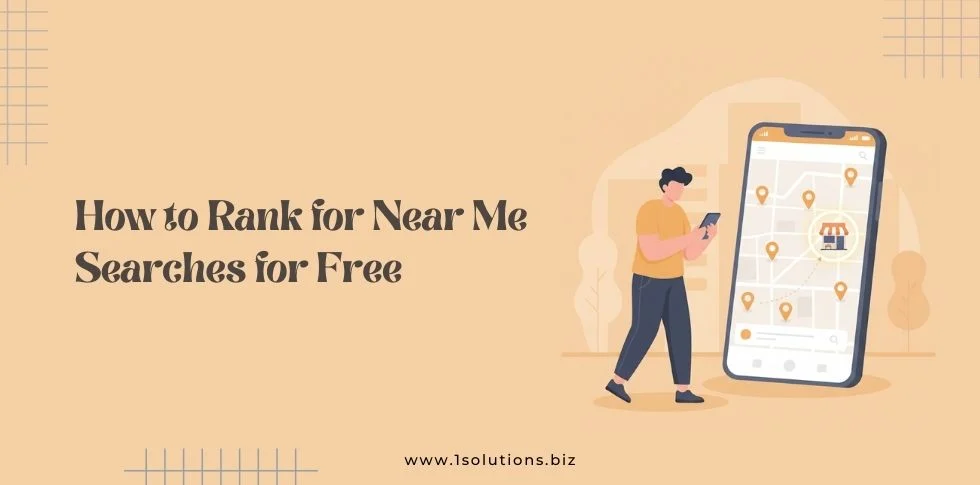
Local businesses today compete for customers who search for services “near me” on their phones. These searches happen millions of times daily. People look for restaurants, plumbers, dentists, and countless other services in their area. The good news? You can rank higher in these searches without spending money on ads.
Near me searches represent one of the most valuable opportunities for local businesses. When someone searches “pizza near me” or “plumber near me,” they’re ready to buy. They need a solution now, and they want it close by. This makes near me traffic extremely valuable for conversion.
This guide shows you exactly how to optimize your business for near me searches using free methods. You’ll learn proven strategies that help your business appear when customers search for your services locally.
Understanding Near Me Search Behavior
Near me searches work differently than regular searches. Google uses the searcher’s location to show relevant local results. The search engine combines several factors to determine which businesses appear in these results.
Most near me searches happen on mobile devices. People search while walking, driving, or sitting at home. They expect quick answers with clear directions to your business. Google responds by showing a map pack with three businesses, followed by organic local results.
The intent behind near me searches is usually commercial or transactional. Unlike informational searches, these users want to visit a business or make a purchase. This makes near me optimization crucial for businesses that serve local customers.
Types of Near Me Searches
Different types of near me searches require different optimization approaches:
- Explicit near me searches: Users type “near me” in their search query
- Implicit local searches: Google detects local intent without “near me” being typed
- Voice searches: Users ask their phone or smart speaker for nearby businesses
- Emergency searches: Urgent needs like “locksmith” or “tow truck”
Each type requires specific optimization tactics. Understanding search behavior helps you tailor your strategy accordingly.
Optimizing Your Google My Business Profile
Your Google My Business (GMB) profile is the foundation of near me search success. This free tool controls how your business appears in Google Search and Maps. A properly optimized GMB profile can dramatically improve your local search visibility.
Start by claiming your business listing if you haven’t already. Google offers this service free, but many businesses miss optimization opportunities. Complete every section of your profile with accurate, detailed information.
Google My Business optimization requires attention to multiple elements working together. Each component influences your ranking potential in near me searches.
Essential GMB Profile Elements
Focus on these critical areas of your GMB profile:
- Business name: Use your exact legal business name without keyword stuffing
- Category selection: Choose the most accurate primary category for your business
- Address consistency: Ensure your address matches exactly across all online directories
- Phone number: Use a local phone number, not a toll-free number
- Website URL: Link to your main website or a location-specific landing page
- Business hours: Keep hours updated, including holiday schedules
- Business description: Write a compelling description using natural language
Each element sends signals to Google about your business relevance and credibility. Incomplete profiles perform poorly in near me searches compared to fully optimized listings.
Adding High-Quality Photos
Photos significantly impact your GMB performance. Businesses with photos receive 42% more requests for directions and 35% more click-throughs to their websites. Upload diverse, high-quality images that showcase your business.
Include these types of photos:
- Exterior storefront or office building
- Interior workspace or dining area
- Products or services you offer
- Team members at work
- Before and after shots (for service businesses)
Update photos regularly to keep your listing fresh. Google favors active, maintained business profiles over stale ones.
Building Local Citations and NAP Consistency
Citations are online mentions of your business name, address, and phone number (NAP). These listings appear on directory sites, review platforms, and local websites. Consistent citations across the web strengthen your local search authority.
Google uses citations to verify your business information and determine legitimacy. Inconsistent NAP data confuses search engines and hurts your near me search rankings. Even small differences like “Street” versus “St.” can create problems.
Start by auditing your existing citations. Search for your business name online and note where it appears. Check for inconsistencies in how your information is displayed across different platforms.
Major Citation Platforms
Focus on these important citation sources first:
- Google My Business: The most important citation for local search
- Bing Places: Microsoft’s business directory
- Apple Maps: Growing in importance for mobile searches
- Facebook Business Page: Social platform with local business features
- Yelp: Major review and directory site
- Yellow Pages: Traditional directory still relevant for SEO
- Better Business Bureau: Adds credibility and trust signals
Industry-specific directories also matter. Restaurants should list on OpenTable and Zomato. Contractors need Angie’s List and Home Advisor profiles. Research directories relevant to your business type.
Creating New Citations
Build local citations systematically by submitting to relevant directories. Focus on quality over quantity. A few accurate citations on authoritative sites outperform many listings on low-quality directories.
When creating citations:
- Use identical NAP information across all platforms
- Include your website URL when possible
- Select appropriate business categories
- Write unique descriptions for each directory
- Add photos when the platform allows
Track your citations using a spreadsheet or citation management tool. Monitor for accuracy and update information when your business details change.
Optimizing Your Website for Local Search
Your website needs local optimization to support near me search rankings. Search engines analyze your site’s content and structure to understand your local relevance. Proper on-page optimization signals your geographic service area to Google.
Create location-specific pages if you serve multiple areas. Each page should target keywords related to that specific location. Avoid duplicate content by making each page unique and valuable for visitors.
Local SEO services often start with website optimization because it forms the foundation for all other local ranking factors.
On-Page Local SEO Elements
Optimize these key areas of your website:
- Title tags: Include your primary keyword and city name
- Meta descriptions: Write compelling descriptions mentioning your location
- Header tags: Use H1, H2, and H3 tags with local keywords naturally
- Content: Mention your city, neighborhood, and service area naturally
- Contact page: Display your complete NAP information prominently
- Footer: Include your address and phone number on every page
Avoid over-optimization by using location keywords naturally. Google penalizes websites that stuff location names unnaturally into content.
Creating Location-Specific Content
Develop content that demonstrates local expertise and community involvement. Write about local events, news, or industry topics relevant to your area. This content signals to Google that you’re genuinely connected to the local community.
Content ideas for local businesses:
- Local event sponsorships or participation
- Community volunteer work
- Local industry trends or news
- Customer success stories from your area
- Local partnerships or collaborations
This content strategy works particularly well when combined with SEO strategies for startups that focus on building local authority from the ground up.
Leveraging Customer Reviews
Customer reviews directly impact near me search rankings. Google considers review quantity, quality, and recency when determining local search positions. Businesses with more positive reviews typically outrank competitors with fewer reviews.
Reviews also influence click-through rates from search results. Potential customers read reviews before choosing which business to contact. Star ratings appear in search results, making them a crucial factor in attracting clicks.
Develop a systematic approach to generating more customer reviews. Don’t leave this to chance or hope customers will review you voluntarily. Most satisfied customers need a gentle reminder to share their experience.
Review Generation Strategies
Implement these tactics to earn more customer reviews:
- Ask at the right time: Request reviews when customers are happiest with your service
- Make it easy: Provide direct links to your review profiles
- Follow up via email: Send review requests in post-service emails
- Train your team: Teach staff how to ask for reviews naturally
- Offer incentives carefully: Some platforms allow incentives, others prohibit them
Focus on getting reviews on Google My Business first, as these have the most impact on near me search rankings. Then work on other platforms like Yelp, Facebook, and industry-specific review sites.
Responding to Reviews
Respond to all reviews, both positive and negative. Your responses show potential customers how you handle feedback and customer service. Google also considers response rates when ranking local businesses.
For positive reviews:
- Thank the customer personally
- Mention specific details they shared
- Invite them to return
- Keep responses varied, not templated
For negative reviews:
- Respond quickly and professionally
- Acknowledge their concerns
- Offer to resolve the issue privately
- Show other potential customers you care about service quality
Avoiding common Google My Business mistakes that hurt local visibility includes properly managing your review responses and maintaining professionalism.
Creating Location-Specific Content
Content marketing plays a vital role in near me search optimization. Creating valuable, location-specific content helps establish your business as a local authority. This content should serve your community while naturally incorporating local keywords.
Blog posts targeting local topics can rank well in both regular and near me searches. When someone searches for information about your service area, your helpful content can appear in results. This builds brand awareness and establishes expertise.
Plan content around local search terms and community interests. Research what your local audience searches for online. Tools like Google’s Keyword Planner can help identify location-specific search terms.
Local Content Topics
Consider these content ideas for local optimization:
- Neighborhood guides: Detailed information about areas you serve
- Local case studies: Success stories from customers in your area
- Community events: Coverage of local happenings and sponsorships
- Local industry insights: How industry trends affect your specific market
- Seasonal local content: Services or products relevant to local weather or seasons
Each piece of content should provide genuine value to readers while naturally mentioning your location and services. Avoid writing content solely for search engines.
Optimizing Content for Featured Snippets
Featured snippets often appear for local searches, including near me queries. Structure your content to answer common questions your customers ask. Use clear headings, bullet points, and concise answers.
Target question-based keywords like:
- “What is the best [service] in [city]?”
- “How to find [service] near me?”
- “Why choose [service] in [location]?”
When your content appears in featured snippets, it gains prominent visibility and can drive significant traffic to your website.
Building Local Backlinks
Backlinks from local websites strengthen your authority for near me searches. These links signal to Google that your business is genuinely connected to the local community. Focus on earning links from reputable local sources rather than buying links.
Local link building requires relationship building and community involvement. The strongest local links come from authentic business relationships and community partnerships.
Link building packages often include local link strategies, but many opportunities exist for businesses to pursue local links independently.
Local Link Building Opportunities
Pursue backlinks from these local sources:
- Chamber of Commerce: Join your local chamber for directory listings and networking
- Local newspapers: Offer expert commentary or sponsor events
- Community organizations: Volunteer or sponsor local charities and nonprofits
- Business associations: Join industry-specific local groups
- Local blogs: Guest post on area lifestyle or business blogs
- Event websites: Sponsor or participate in local events
- Supplier websites: Ask vendors to link to customer success stories
Quality matters more than quantity for local links. One link from a respected local newspaper outweighs dozens of links from low-quality directories.
Creating Link-Worthy Local Content
Develop content that naturally attracts links from other local websites. This might include:
- Local market research or surveys
- Community event coverage
- Local business spotlights or collaborations
- Area economic development news
- Local hiring or expansion announcements
Share this content with local media outlets, business partners, and community organizations. Many will link to valuable local content naturally.
Utilizing Schema Markup for Local SEO
Schema markup helps search engines understand your website content better. Local business schema provides specific information about your business location, hours, services, and contact details. This structured data can improve how your business appears in search results.
Implementing schema markup requires some technical knowledge, but the benefits for local search are significant. Search engines can display rich snippets with your business hours, reviews, and location directly in search results.
Technical SEO includes schema implementation as a key component for improving search visibility.
Types of Local Schema Markup
Implement these schema types for local businesses:
- LocalBusiness: Basic business information and location
- OpeningHours: Detailed hours including special schedules
- PostalAddress: Complete address information
- GeoCoordinates: Exact latitude and longitude of your location
- Review: Customer reviews and ratings
- Service: Specific services you offer
Use Google’s Structured Data Testing Tool to verify your schema implementation. Proper schema markup can enhance your appearance in near me search results.
Optimizing for Voice Search
Voice search continues growing, especially for local queries. People often use voice search to find nearby businesses while driving or multitasking. These searches tend to be conversational and question-based.
Voice searches for local businesses typically follow patterns like “Where is the nearest coffee shop?” or “Find a plumber near me.” Optimizing for these natural language patterns can improve your near me search visibility.
Voice search optimization requires understanding how people speak versus how they type when searching.
Voice Search Optimization Strategies
Optimize your content for voice search with these tactics:
- Target question keywords: Create content answering common voice queries
- Use conversational language: Write how people actually speak
- Optimize for featured snippets: Voice assistants often read featured snippet content
- Focus on local long-tail keywords: Voice searches tend to be longer and more specific
- Ensure fast page loading: Voice search users expect quick answers
Create FAQ pages addressing common voice search questions about your business and services. Structure answers clearly and concisely for voice assistant compatibility.
Monitoring Your Local Search Performance
Track your near me search performance to measure optimization success. Several free tools provide insights into your local search visibility and ranking positions.
Google My Business Insights shows how customers find your listing, what actions they take, and how your performance changes over time. This data helps identify which optimization efforts produce the best results.
Set up regular monitoring to catch issues quickly. Local search rankings can fluctuate, and algorithm updates sometimes affect local businesses differently than other websites.
Key Local SEO Metrics
Monitor these important local search metrics:
- GMB impressions: How often your listing appears in search results
- GMB clicks: How many people click through to your website or call
- Direction requests: How many people get directions to your business
- Local keyword rankings: Your position for important local search terms
- Review velocity: How quickly you’re earning new reviews
- Website traffic from local search: Visitors coming from local search results
Use Google Analytics to track website traffic from local searches. Set up goals to measure conversions from near me search visitors.
Free Tools for Local SEO Monitoring
These free tools help monitor your local search performance:
- Google My Business Insights: Official data from Google about your listing performance
- Google Analytics: Website traffic and conversion data
- Google Search Console: Search performance data and indexing issues
- Google Alerts: Monitor mentions of your business online
- BrightLocal Local Search Results Checker: Free tool for checking local rankings
Regular monitoring helps you understand which optimization strategies work best for your business and market.
Advanced Local SEO Tactics
Once you’ve mastered the basics, consider these advanced tactics for near me search optimization. These strategies can provide competitive advantages in crowded local markets.
Create location-specific landing pages for each area you serve. These pages should contain unique content about that specific location, not duplicate content with just the city name changed. Include local landmarks, neighborhoods, and area-specific services.
Implement local internal linking strategies. Link from your main location pages to specific service pages, and vice versa. This helps search engines understand your local relevance and service offerings.
Leveraging Google Posts
Google Posts allow you to share updates directly in your GMB listing. These posts appear in your knowledge panel and can influence local search visibility. Regular posting keeps your listing active and engaging.
Optimizing Google Business posts for local engagement can improve your overall GMB performance and near me search rankings.
Use Google Posts for:
- Promoting special offers or events
- Sharing company news and updates
- Highlighting customer testimonials
- Announcing new services or products
- Posting helpful tips related to your industry
Include compelling images and clear calls-to-action in your Google Posts. Fresh content signals an active business to both Google and potential customers.
Competitor Analysis for Local SEO
Research your local competitors to identify optimization opportunities. Analyze their GMB listings, website content, and local link profiles. Look for gaps you can fill or areas where you can provide better information.
Study competitors who rank well for your target near me searches:
- What keywords do they target on their website?
- How complete are their GMB profiles?
- What types of content do they publish?
- Which local websites link to them?
- How do they encourage customer reviews?
Use these insights to refine your own local SEO strategy and identify untapped opportunities.
Common Near Me Search Optimization Mistakes
Avoid these common mistakes that can hurt your near me search performance. Many businesses unknowingly make these errors, which prevent them from ranking well in local searches.
Inconsistent NAP information across different platforms confuses search engines and customers. Even small variations can impact your local search rankings negatively. Always use identical business information everywhere online.
Neglecting mobile optimization hurts near me search performance significantly. Most local searches happen on mobile devices, so your website must load quickly and display properly on smartphones.
Technical Issues That Hurt Local Rankings
Watch out for these technical problems:
- Slow page loading speeds: Mobile users abandon slow websites quickly
- Broken contact forms: Customers can’t reach you when forms don’t work
- Incorrect address markup: Schema errors can confuse search engines
- Missing location pages: No dedicated pages for service areas
- Duplicate GMB listings: Multiple listings for the same location
Understanding why Google isn’t indexing your page can help resolve technical issues that prevent your local content from appearing in search results.
Content and Strategy Mistakes
These content-related mistakes also harm local search performance:
- Keyword stuffing location names unnaturally
- Creating duplicate content for multiple locations
- Ignoring customer review management
- Focusing only on Google and ignoring other local platforms
- Not updating business information when details change
Stay focused on providing value to local customers rather than trying to manipulate search engines.
Measuring ROI from Near Me Search Optimization
Track the business impact of your near me search optimization efforts. Local SEO should generate measurable results in terms of leads, customers, and revenue. Set up proper tracking to demonstrate ROI from your optimization work.
Connect your local search efforts to business outcomes. Track which near me keywords drive the most valuable traffic. Monitor how local search visitors convert compared to other traffic sources.
Use call tracking numbers on your GMB listing to measure phone calls from local search. Many local businesses receive more phone calls than website visits from near me searches.
Key Performance Indicators for Local SEO
Focus on these KPIs that matter most for local businesses:
- Local search visibility: Rankings for important near me keywords
- GMB engagement: Clicks, calls, and direction requests
- Review acquisition rate: New reviews per month
- Local website traffic: Visitors from local search results
- Local conversion rate: How well local traffic converts to customers
- Cost per local lead: Efficiency of your local SEO investment
Compare your performance before and after implementing optimization strategies. Document improvements to justify continued investment in local SEO.
Near me search optimization requires consistent effort and patience. Results typically appear gradually over several months. However, the long-term benefits make this investment worthwhile for local businesses.
Start with the foundational elements like GMB optimization and NAP consistency. Then gradually implement more advanced tactics as you see results. The key is maintaining consistent, high-quality optimization efforts over time.
Ready to dominate near me searches for your business? Get a free proposal from 1Solutions to learn how our local SEO experts can help accelerate your local search success. Our team specializes in helping businesses rank higher in near me searches and attract more local customers.
Frequently Asked Questions
How long does it take to rank for near me searches?
Most businesses see initial improvements in near me search rankings within 2-3 months of implementing optimization strategies. However, achieving top rankings typically takes 6-12 months of consistent effort. The timeline depends on your competition level, current online presence, and how comprehensively you implement optimization tactics.
Do I need a physical address to rank for near me searches?
Yes, Google requires a physical business address to appear in near me search results. However, you can serve customers outside your immediate area. Service-area businesses can list their location and specify which areas they serve. Home-based businesses can also rank for near me searches by properly setting up their service area in Google My Business.
How many reviews do I need to rank well locally?
There’s no magic number of reviews needed for local rankings. Quality and recency matter more than quantity. However, businesses with 10+ recent positive reviews typically perform better than those with fewer reviews. Focus on consistently earning new reviews rather than trying to reach a specific number quickly.
Can I rank for near me searches without a website?
While possible, having a website significantly improves your near me search performance. Google My Business listings can appear in local results without websites, but businesses with optimized websites typically outrank those without. A website provides more opportunities to demonstrate relevance and authority for local searches.
What’s the difference between near me searches and regular local searches?
Near me searches specifically include location-based intent, either explicitly (typing “near me”) or implicitly (Google detecting local intent). Regular local searches might target specific cities or neighborhoods. Near me searches rely more heavily on the user’s current location, while regular local searches target predetermined geographic areas.
Should I create separate pages for each city I serve?
Yes, if you serve multiple distinct cities or areas, create dedicated pages for each location. Each page should contain unique, valuable content specific to that area. Avoid duplicate content with just city names swapped out. Include local landmarks, neighborhood information, and area-specific services to make each page genuinely useful.
How do I optimize for voice search near me queries?
Voice search optimization for local businesses involves targeting conversational keywords and question-based phrases. Create content that answers common voice queries like “Where’s the closest coffee shop?” or “Find a dentist near me.” Use natural language in your content and ensure your Google My Business information is complete and accurate, as voice assistants often pull data from GMB listings.









 in India